
Between thwarting the Zionist airport project in Mocha and breaking the siege of Sana’a: Yemeni superiority ends the era of guardianship and strips Washington and Riyadh of their last cards of blackmail
The current round of direct confrontation in Yemeni airspace transcends the mere breaking of the geographical blockade, delving into the heart of a struggle for wills and strategic sovereignty. Sana’a—derived from the Yemeni people and their religious commitment—has succeeded in imposing a firm field equation that has effectively nullified the eleven-year-long US-Saudi veto. Sana’a’s determination to break the blockade imposed on Sana’a and Hodeidah airports by force of arms is met with a resolute national consciousness and an absolute rejection of transforming Mocha airport into a maritime and intelligence hub serving the agenda of American and British hegemony and securing an operational theater for the Zionist entity on the western coast.
Sanaa declares, with blood and fire, that Yemeni airports will either be gateways serving the Yemeni people and their sovereignty, or they will become militarily vulnerable centers of conspiracy, falling under the purview of the armed forces’ target bank. This firm stance has imposed a new political and military reality, breaking humanitarian constraints and forging comprehensive deterrent equations that have made the heartland of the Saudi enemy and its economic interests directly hostage to securing the ports and airspace sovereignty of the Republic of Yemen.
Breaking the embargo and logistical alternatives
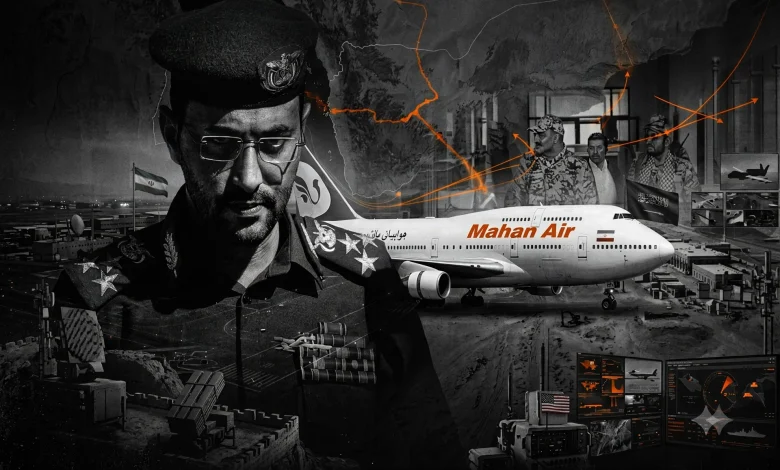
The strategic landing of the Iranian plane is linked to a battlefield scenario in which Sana’a’s air defenses demonstrated their superiority and the Saudi Royal Air Force’s inability to enforce its red lines. At 5:20 AM on Friday, July 3, 2026, a formation of Saudi warplanes violated Yemeni airspace in an attempt to intercept the same plane on its maiden flight, carrying over 200 Yemeni citizens, including stranded individuals, the wounded, and the official delegation returning from the funeral of the martyred Supreme Leader, Ayatollah Ali Khamenei. The Yemeni air defenses responded immediately and directly with surface-to-air missiles, engaging the hostile formation and forcing it to retreat in disgrace, thus securing the plane’s landing in Sana’a.
This blatant aerial defeat of the enemy is what later prompted its operations rooms in Riyadh to resort to the cowardly option of “ground-based structural bombardment” of Sana’a airport’s runway on the second flight, in order to avoid direct aerial confrontation. Instead of demonstrating strength, the structural destruction of the runway became a testament to Saudi military impotence in the face of Sana’a’s logistical flexibility. Sana’a activated its alternative emergency plan, directing the aircraft to land safely and smoothly at Hodeidah International Airport under heavy bombardment. This demonstrated Sana’a’s possession of sovereign alternatives that were both protected and vulnerable to Saudi bombing.
This flexibility was not limited to geographical maneuvering; it also revealed the complete collapse of the technological air superiority that the Saudi-led coalition had boasted of for years. The enemy’s advanced monitoring and interception systems proved incapable of disrupting the direct air route between Sana’a and Tehran. This practical step effectively ended the policy of air blockade and forced the coalition to reluctantly acknowledge the failure of the geographical siege under the strikes of Yemeni air defenses.
The field data regarding this enemy military failure can be summarized in the following points:
Air interception time : 5:20 AM, Friday, July 3, 2026.
Target cargo : A civilian aircraft carrying more than 200 stranded, sick, and wounded citizens.
Field deterrence : Immediate launch of surface-to-air missiles and forcing enemy warplanes to flee.
Logistical flexibility : Successfully transferring the operational landing route to Hodeidah International Airport the moment Sana’a runway was targeted.
Abha equation and airspace ban
Sanaa did not stop at defense and logistical alternatives; rather, it immediately translated the deterrence equation into a swift and decisive offensive strike that shook the foundations of the Saudi regime in its own backyard. In response to the targeting of Sanaa airport’s runway, the Yemeni armed forces carried out a qualitative military operation targeting Abha International Airport deep inside Saudi territory with a number of ballistic missiles and drones, achieving precise hits that disrupted air traffic. This strategic operation practically and definitively established the equation of “an airport for an airport, an airspace for an airspace, and a facility for a facility,” placing the economic cost of the blockade directly at the heart of the aggressor kingdom.
To culminate this decisive operational shift, th