
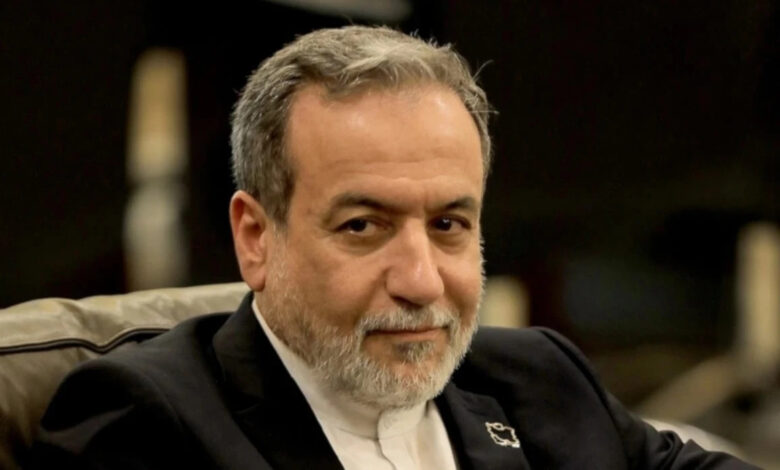
Araghchi: The decision to negotiate rests with the Supreme National Security Council… and Iran has not relinquished its right to enrichment.
Iranian Foreign Minister Abbas Araqchi stressed that the decision to engage in political negotiations or to end military operations was never an individual decision, but rather came based on a decision issued by the Iranian Supreme National Security Council.
Araghchi’s remarks came during a press interview conducted by journalist Jawad Moghavi, in which he discussed the background of the transition from military action to the diplomatic track, and the nature of the recent military confrontations that Iran has engaged in.
In response to the arguments that the diplomatic path following the “12-day war” paved the way for a new confrontation that lasted 40 days, Araqchi denied this interpretation, stressing that this argument is based on a “misunderstanding” that needs to be corrected, and that saying that the negotiations were the reason for the outbreak of the war does not reflect the reality of what happened.
He explained that the other side was determined to achieve a series of goals targeting Iran, while Iranian diplomatic efforts were focused on containing this trend and directing it towards another path away from military confrontation.
Araghchi added that the option of dialogue always remains the easiest and least costly path to obtaining rights, stressing that Iran conducted the negotiations “from a position of strength” and in an “honorable” manner, based on its field achievements.
He pointed out that the period following the “12-day war” witnessed a careful assessment and the drawing of important military and political lessons, which contributed to enhancing the readiness of the Iranian armed forces for subsequent confrontations.
He stressed that the decision to end that war and the timing of the ceasefire were entirely subject to the assessments and decisions of the Iranian Supreme National Security Council.
The Iranian Foreign Minister stressed the need to prioritize the supreme national interest over personal considerations, expressing his regret over what he described as some people making decisions motivated by a desire to preserve their personal reputation, and emphasizing that his political future and personal reputation are of no importance compared to the sacrifices made by the sons of the nation with their lives.
Araghchi revealed the mechanisms for preparing diplomatic positions, explaining that as soon as the option of negotiation was adopted, the frameworks, principles and rules governing it were determined through intensive and officially documented meetings.
Regarding the suggestion of making concessions related to suspending the Iranian nuclear program for several years in exchange for the departure of hardline figures in the enemy camp, including Benjamin Netanyahu, Araqchi clarified that these fateful decisions are not in the hands of individuals, stressing that the time periods for suspending the program that the other side was demanding exceeded what was rumored to be “a few years,” and represented one of its last demands, which he described as impossible.
He pointed out that Iran has never given up on the issue of uranium enrichment, even after the end of the two rounds of nuclear negotiations, due to the existence of complex and intractable issues in this file.
Araghchi stressed that the real failure lies in letting the enemy fight and achieve its goals without resistance, emphasizing that Iranian diplomacy continued to negotiate in order to obtain rights and preserve gains, even if this required waging a war in defense of those principles, inspired by an immortal phrase of the martyred leader, Imam Sayyid Ali Khamenei.