
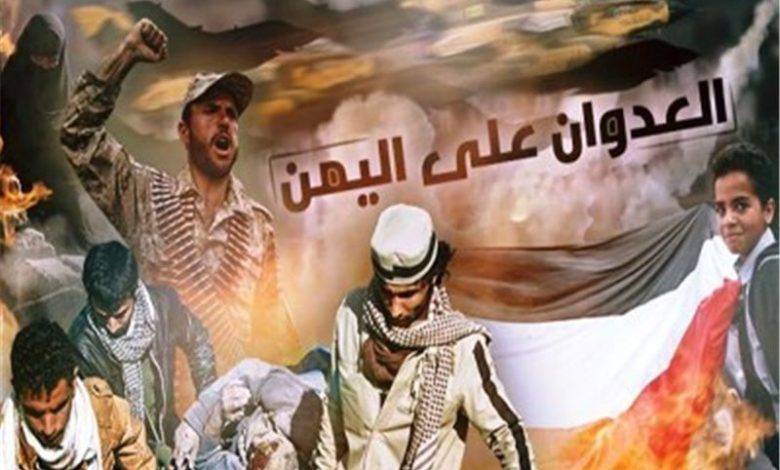
December 23: A Day Written in Blood, Exposing the Crimes of Aggression
Over the years of the American-Saudi-Emirati aggression against Yemen, December 23 has become a blood-soaked date etched into the collective memory of the Yemeni people. It carries recurring scenes of attacks on families, peaceful gatherings, residential neighborhoods, and civilian facilities—crimes that showed no regard for human dignity or the sanctity of life.
On this day, the bombardment was not directed at military targets as the aggressors claim; rather, it was aimed squarely at homes, markets, roads, water sources, and even children at play. It laid bare the true nature of the war waged on Yemen: a retaliatory campaign rooted in mass killing, terror, and the breaking of will.
This report reviews the most prominent crimes committed on this date, arranged chronologically, to affirm that what occurred were not isolated incidents but part of a continuous criminal trajectory.
December 23, 2015: Annihilation of Families and Direct Targeting of Life’s Essentials
On this day in 2015, the aggression opened a dark chapter in Saada Governorate. The entire family of citizen Abdulkarim Hamoud Al-Ezzi was killed when an airstrike hit their home in Al-Khannaq Amlah village, Kataf District—one of the most heinous crimes to wipe out a Yemeni family inside its own residence.
In the same governorate, three civilians were killed and ten others—among them women and children—were injured when a strike targeted a house in Nashour area, Al-Safra District, reflecting a deliberate pattern of targeting inhabited homes.
The aggression went further, extending its crimes to vital water sources. A water well was struck in Bakil and Bani Siyah, Razih District, as well as areas of Al-Marakhi between Munabbih and Ghamr districts, alongside Saudi missile shelling of various parts of the border district of Ghamr.
In Al-Hudaydah, airstrikes hit the Technical Institute and Jabal Al-Rabb in Bajil District, and Al-Kudn in Ad-Dahi District. Other strikes targeted Al-Ghafira in Al-Ma’afer District, Taiz, and damaged agricultural lands in Hamdān District, Sana’a Governorate.
December 23, 2016: Cluster Bombs and an Expanded Targeting Campaign
In 2016, crimes against civilians continued. Four citizens were injured in a strike on Qadhbah area, Ad-Durayhimi District, while others were wounded in an attack on a landfill site in Al-Jabbānah area, Al-Hali District, Al-Hudaydah Governorate.
In Saada, the air force carried out intensive raids on Al-Harbah, Mandabah, and Āl Sālim, using cluster munitions in Al-Buqa’—a dangerous escalation showing utter disregard for civilian lives.
Airstrikes extended to Nihm (Sana’a), Taiz, Hajjah, and Amran, causing widespread damage to public and private property and underscoring the breadth of indiscriminate targeting.
December 23, 2017: Targeting Peaceful Protests, Children, and Women
This year witnessed some of the deadliest crimes. Five civilians, including a child, were killed and more than twenty injured when four airstrikes hit a peaceful solidarity rally with Al-Aqsa Mosque in Arhab District, Sana’a Governorate.
In an equally horrific crime, five children were killed while playing football near Arhab University, sending shockwaves and confirming the deliberate targeting of children.
Residential neighborhoods in Sanhan, a truck along the Al-Jah Coast (Al-Hudaydah), and a house in Sirwah (Marib) were also attacked. Three women were killed and another injured while returning from a funeral in Razih District, Saada.
This day also saw the use of cluster and phosphorus munitions in Dhubab and Taiz, alongside heavy raids on Al-Jawf, Hajjah, Mawza’, Kataf, Ar-Rabu’ah, and Jizan, marking an unprecedented escalation.
December 23, 2018: Field Killings and Intense Artillery Shelling
In 2018, citizen Abdullah Farid bin Haidar Al-Sharif was shot dead by aggression-aligned mercenaries at a checkpoint south of Marib City while traveling with his family—an on-the-spot execution reflecting routine violations.
In Al-Hudaydah, mercenaries carried out heavy artillery shelling on Madinat Al-Sha’b, Al-Waha Hotel, Kilometer 7, and Kilometer 16, while establishing military fortifications within residential areas. Meanwhile, airstrikes continued on Saada and Sana’a, and Munabbih District was subjected to Saudi missile attacks that hit homes and civilian property.
December 23, 2019–2021: Continuous Shelling and Targeting of Service Infrastructure
Crimes persisted during these years. Civilians were killed and injured by Saudi border guard fire in Munabbih, while farms and homes in Al-Hudaydah were heavily shelled with guided missiles and artillery.
In 2021, airstrikes targeted Al-Sab’een residential neighborhood in the capital, damaging Al-Sab’een Maternity and Childhood Hospital and terrifying patients and children, in addition to striking Al-Sab’een Bridge and cutting off the main ro