
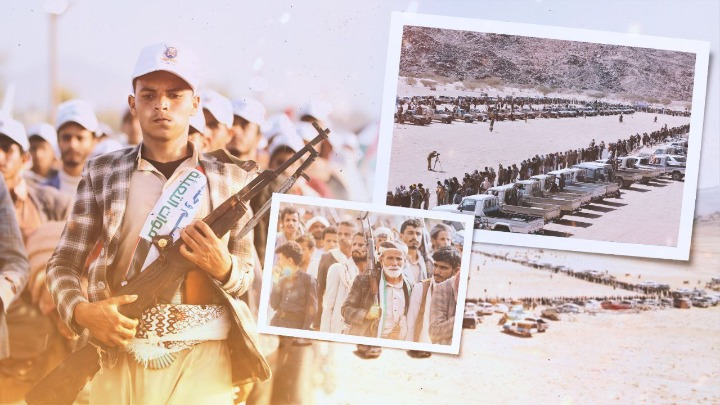
The Yemeni Tribe: Constant Readiness and Ongoing Mobilization in Line with the September 21 Revolution
Throughout various stages of history, the Yemeni tribe has embodied the first line of defense for land, identity, and sovereignty. It has never been an isolated social entity detached from national causes; rather, it has consistently served as a fundamental pillar in the equation of resilience and confrontation.
Today, the tribe once again steps to the forefront of the national scene, reaffirming its active role in defending Yemen and supporting the causes of the Ummah—foremost among them the Palestinian cause—guided by the path of the September 21 Revolution and an independent sovereign decision.
General Mobilization and Open Readiness
The liberated Yemeni governorates are witnessing an unprecedented state of general mobilization, manifested in large tribal gatherings, armed meetings, and continuous mass rallies, all expressing full readiness to confront any escalation by the enemy and its proxies.
Across various arenas, tribes affirm their constant preparedness to support the armed forces with manpower and equipment, to pursue confrontation options in defense of the homeland, to safeguard its sovereignty, and to uphold Islamic holy sites.
A Tribal Movement Driven by Faith and Revolutionary Awareness
The current tribal movement stems from a firm faith-based foundation and a revolutionary awareness inspired by the principles of the September 21 Revolution, which restored the tribe’s true role as a national partner in decision-making rather than a tool manipulated by external powers.
This movement reflects an advanced understanding of the nature of the conflict with hegemonic forces and an awareness of the scale of targeting directed at Yemen and the Ummah—placing the tribe at the heart of the battle to defend sovereignty and an independent national decision.
Partnership in Defending Sovereignty
The September 21 Revolution marked a pivotal turning point that reinstated the role of the Yemeni tribe, liberating it from attempts at exploitation and fragmentation, and establishing a genuine partnership between the tribe and the state in protecting the internal front.
Over the years of aggression and blockade, the tribe has proven to be a national safety valve, a steadfast supporter of the revolutionary leadership, and a solid barrier against fragmentation and infiltration projects led by the United States, “Israel,” and their tools.
Palestine in the Conscience of the Yemeni Tribe
The Yemeni tribe’s positions have never been detached from the causes of the Ummah. Palestine has remained deeply rooted in its conscience and stances—as a religious, moral, and humanitarian cause.
Tribal meetings, armed rallies, and popular demonstrations have embodied a steadfast commitment to supporting the Palestinian people, rejecting Zionist crimes, and expressing readiness to bear the consequences of this stance, regardless of the challenges.
Two Years of Supporting Gaza
Over two full years of supporting Gaza, Yemen has sustained a broad popular and tribal presence across various arenas through marches, armed tribal gatherings, and solidarity rallies—carrying the spirit of Yemeni chivalry and authentic loyalty to Palestine.
According to official statistics, popular activities in support of Gaza reached:
49,354 marches and demonstrations
94,478 popular events
549,769 seminars
81,878 cultural evenings
350,633 student sit-ins at universities and schools
317,785 popular, tribal, and community sit-ins
In terms of human capacity-building, 1,103,647 trainees graduated from “Al-Aqsa Flood” mobilization courses at the first level, and 132,046 at the second level, alongside the execution of 5,148 maneuvers, 1,349 military parades, and 3,362 military marches.
Sustained Resilience and Wise Decision-Making
Armed tribal sit-ins and large-scale gatherings across the liberated governorates confirm that the Yemeni tribe represents a cohesive national force—combining the authenticity of tribal heritage with the ability to shape decisive positions. This cohesion has contributed to thwarting enemy schemes and foiling attempts to penetrate the internal front or undermine popular resolve.
Despite the high level of readiness and widespread popular and tribal preparedness, the tribes affirm that the timing and form of confrontation rest with the revolutionary leadership, represented by Sayyed Leader Abdul-Malik Badr al-Din al-Houthi, who assesses the phase and its requirements and leads the battle with wisdom and responsibility—serving the interests of Yemen and the Ummah and ensuring steadfast national positions and continued resilience.
The Tribe: Shield of the Homeland and Compass of Liberation
As it moves today along the path of the September 21 Revolution, the Y