
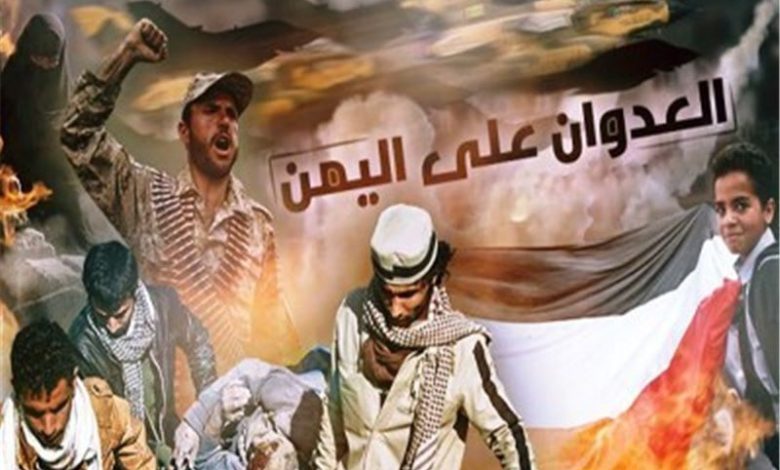
January 12: An Open Memory of the Aggression’s Crimes Over the Years
January 12 is not merely a date on Yemen’s calendar; it is a stark marker exposing a recurring pattern of violations targeting civilians and service infrastructure across multiple governorates. Over the years of aggression, this day has become a living testimony to systematic attacks on resorts and markets, homes and roads, schools and telecommunications networks—demonstrating that the aggression was not confined to frontlines alone, but extended to the very foundations of civilian life.
January 12, 2016: The Strike That Exposed the Method
On this day, several Yemeni governorates recorded a wide range of attacks:
Sana’a: Tourist facilities, places of worship, and residential areas in Bani al-Harith, Sanhan, and Bani Hushaysh were targeted, resulting in civilian casualties and extensive damage to public and private property.
Sa’ada: Airstrikes hit areas including Razih and Majz, along with telecommunications networks—an early indication of deliberate targeting of service infrastructure.
Al-Hodeidah, Dhamar, and Taiz: Attacks expanded to include government facilities, public roads, and residential neighborhoods, disrupting essential services and directly impacting daily civilian life.
This day marked a clear turning point, revealing the widening scope of targeting to encompass all aspects of civilian existence.
January 12, 2017: Escalation Against Villages and Neighborhoods
The following year witnessed the continuation of the same pattern:
Al-Hodeidah: Civilian homes in Bayt al-Faqih and other areas were targeted, while coastal districts came under airstrikes and naval shelling.
Sa’ada: Attacks involving internationally prohibited weapons were recorded in some areas, alongside missile and artillery shelling across the border.
Sana’a, Taiz, and Shabwah: Airstrikes struck civilian zones, roads, and schools, confirming the geographic and functional expansion of the targeting.
January 12, 2018: Strikes on Educational and Sports Facilities
This year was marked by direct attacks on educational and sports infrastructure:
Dhamar: Sports facilities and technical institutes were damaged, causing significant losses to the youth and vocational education sectors.
Sa’ada: Border shelling continued, along with internal airstrikes on residential areas, exacerbating humanitarian suffering.
January 12, 2019: Civilians in the Line of Fire
Attacks persisted against homes and border villages in Sa’ada and Hajjah, accompanied by artillery and missile shelling of populated areas.
In Al-Hodeidah, the districts of Hays, Al-Hali, and Al-Durayhimi experienced intense fire escalation targeting residential neighborhoods and roads, resulting in widespread property damage and disruption of normal life.
January 12, 2020–2021: Continued Targeting of Services
Al-Hodeidah: Shelling of residential neighborhoods and villages surrounding Al-Durayhimi, Al-Tuhayta, and Hays continued, with extensive use of medium weapons.
Sa’ada: Repeated cross-border shelling struck populated districts.
Marib: Airstrikes were recorded in multiple districts, including areas near civilian تجمعات, with no regard for humanitarian considerations.
January 12, 2022: War on Communications and Water
This year represented a peak in targeting service infrastructure:
Sa’ada: Airstrikes hit telecommunications networks and water reservoirs, disrupting essential services for hundreds of thousands of civilians.
Shabwah, Marib, Al-Bayda, and Al-Jawf: Dozens of airstrikes were recorded on populated districts and civilian properties.
Al-Hodeidah: Artillery shelling and the construction of new fortifications continued, deepening the humanitarian crisis along the western coast.
January 12, 2023: The Ongoing Consequences of War
Even years after the onset of the aggression, remnants of war continued to claim civilian lives in Al-Tuhayta and Al-Durayhimi, while cross-border shelling persisted in Sa’ada—a stark illustration of the enduring cost of a prolonged war whose repercussions have yet to cease.
A Systematic Targeting of Civilian Life
Across the years of aggression, January 12 has become a recurring emblem of violations targeting:
Civilians in their homes and villages.
Essential services, including water and telecommunications.
Educational and sports facilities that should be protected from conflict.
The repetition of these incidents over successive years leaves no doubt as to the existence of a systematic approach to targeting civilian life—one that contravenes international humanitarian law and places the international community before a moral and legal responsibility that cannot be evaded.