
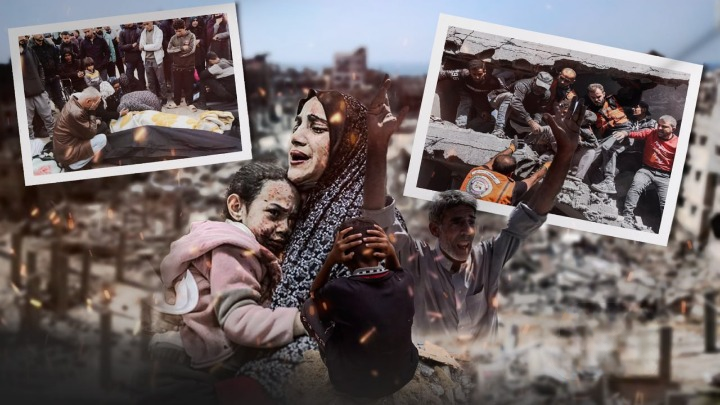
An Agreement Without Guarantees… Gaza Between the Fire of Aggression and the Silence of the World
More than three months after the ceasefire agreement in Gaza came into effect, the Strip remains under the weight of ongoing aggression amid a frightening international silence.
Children, women, and the elderly are paying the highest price, as the Zionist enemy continues to violate the truce on a daily basis, while the international community fails to provide real protection for civilians. Thus, the ceasefire remains merely an agreement on paper, unable to halt the fire, hunger, cold, and destruction.
Toll of the Aggression… Alarming Figures
The death toll from the Zionist aggression on the Gaza Strip has risen to 71,551 martyrs and 171,372 injured since October 7, 2023, according to the Palestinian Ministry of Health. Over the past 24 hours alone, one person was killed and seven others were injured as a result of daily ceasefire violations. A large number of victims remain trapped under the rubble, while rescue teams are unable to reach them.
Despite the ceasefire entering into force on October 11, the Zionist enemy has continued to violate it, resulting since then in 466 martyrs and 1,294 wounded, in addition to the recovery of 713 bodies from beneath the debris.
Children: The First Victims
Today, the infant Shatha Abu Jarad (6 months old) died as a result of extreme cold, bringing the number of children who have died due to harsh winter conditions to nine since the beginning of the season. Medical sources reported that the sharp drop in temperatures, combined with the lack of shelters and heating, has intensified the suffering of children and displaced families, many of whom live in dilapidated tents that offer no protection from the cold.
Mahmoud Basal, spokesperson for the Civil Defense, warned that the continuation of cold waves alongside the deteriorating humanitarian situation will lead to further deaths among children and the elderly unless urgent humanitarian assistance is provided.
Ongoing Violations Despite the Agreement
Enemy aircraft carried out two airstrikes on Khan Younis and opened fire toward areas east of Jabalia refugee camp and Deir al-Balah, while western Gaza City witnessed intensive surveillance and warplane activity. These daily violations confirm that the ceasefire has not stopped the targeting, reflecting the fragility of the agreement and the absence of international guarantees for its implementation.
UNRWA Warns of a Humanitarian Catastrophe
UNRWA Commissioner-General Philippe Lazzarini warned of the deterioration of humanitarian conditions in the Strip, noting that children have been deprived of basic vaccinations for more than two years due to the aggression and blockade, exposing them to serious health risks.
He added that the harsh winter, with severe cold waves and heavy rainfall, has caused widespread flooding, further compounding the suffering of displaced families living in uninhabitable tents and shelters, while the enemy continues to block the entry of essential humanitarian aid.
The Enemy Deliberately Undermines the Agreement
Hamas confirmed, after 100 days since the agreement, that the Zionist enemy is deliberately undermining the ceasefire and stripping it of its substance, despite the movement’s full commitment to all its provisions.
Hamas called on the mediators to assume their responsibilities, compel the enemy to immediately halt the violations, complete the first phase, proceed to the second phase, and ensure the unhindered entry of humanitarian aid.
Gaza Between Fire and Silence
Despite the agreement, the Gaza Strip remains trapped in a cycle of death, cold, hunger, and destruction, amid international silence and the absence of any concrete measures to protect civilians or enforce the ceasefire.
Children, women, and the elderly remain the most affected, while the daily violations confirm that the agreement remains ink on paper, with no real impact in stopping the aggression or alleviating humanitarian suffering.
The reality in Gaza compels the international community to act immediately, before the humanitarian catastrophe turns into an irreversible tragedy.