
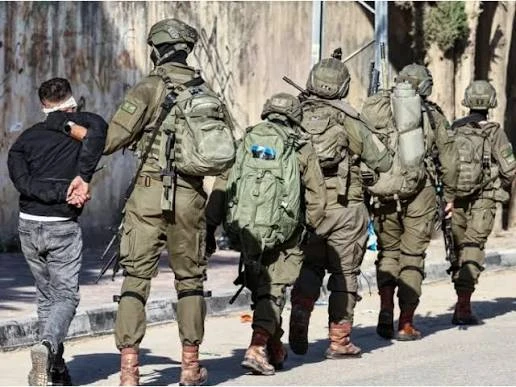
Palestinian prisoners’ media office: Widespread escalation in arrests, targeting of prisoners by Israeli enemy in January
The Palestinian Prisoners’ Media Office stated on Monday that the past month of January witnessed a widespread escalation in arrests and targeting of prisoners in the West Bank, Jerusalem, and the Gaza Strip by the Zionist enemy.
In a statement seen by the Yemeni News Agency (Saba), the office reported that 590 arrests were documented in the West Bank and Jerusalem during January 2026, including 13 women and 45 children. These arrests were accompanied by widespread raids on villages and refugee camps and home invasions by the Zionist enemy forces.
The statement added that the arrests included Nasser Qaws, head of the Prisoners’ Club in Jerusalem, and MP Riyad Radad, in addition to journalists. Sheikh Najeh Bakirat was also summoned for questioning. Furthermore, enemy forces stormed Birzeit University, firing live ammunition and tear gas inside the campus and detaining its vice president.
He explained that the youngest detainee is an 11-year-old Palestinian child from Al-Mughayyir. Four female prisoners who had been released were re-arrested, some of whom were placed back under administrative detention. The wife of martyr Yahya Ayyash was also arrested, and photos of her in handcuffs were published.
The office noted the death of prisoner Hamza Abdullah Adwan (67 years old) from Gaza, bringing the number of martyrs in the prisoner movement to 324, due to medical negligence and harsh detention conditions.
It stated that during January, the Israeli enemy issued 722 administrative detention orders, bringing the number of administrative detainees to more than 3,500, which constitutes more than a third of the 9,500 prisoners.
Regarding the Gaza Strip, the Palestinian Prisoners’ Media Office said that the Zionist enemy continues to detain fishermen and young men arrested during the aggression. Sixty-nine prisoners in critical health conditions were released, and approximately 2,000 prisoners from Gaza remain in detention, including cases of enforced disappearance, under degrading detention conditions. Starvation, medical neglect, beatings, and lack of heating.