
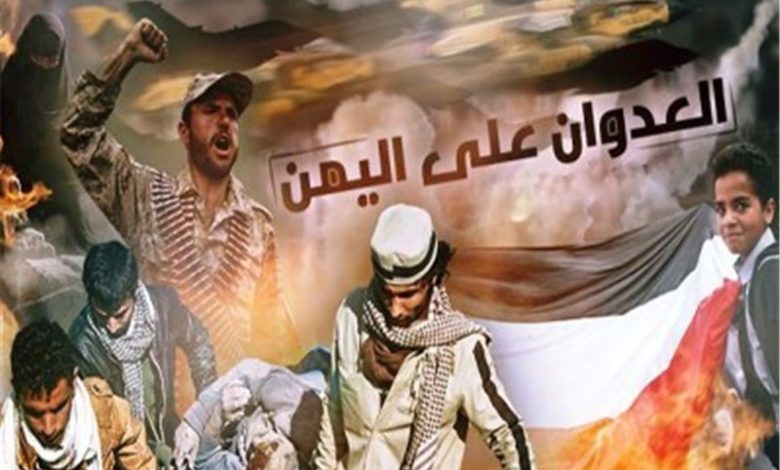
Systematic Destruction and an Unquenchable Memory: A Documented Record of the Crimes of the US-Saudi-Emirati Aggression on This Day, April 2nd
On April 2nd, one of the darkest chapters in the record of the US-Saudi-Emirati aggression against Yemen unfolds. Crimes are repeatedly committed against the most vulnerable groups, from displaced persons and women to children, targeting vital infrastructure that connects people to their surroundings. This day does not recount isolated incidents, but rather reveals a comprehensive strategy based on direct killing, isolation, and the destruction of the foundations of life, within the context of a total war that makes no distinction between civilians and military targets.
2015: Border Bombing Massacres
On April 2, 2015, ten civilians were killed and eight others, including women and children, were wounded by Saudi missile and artillery shelling that targeted the districts of Baqim, Razih, and Munabbih in Saada Governorate. This was one of the early crimes committed against the border regions.
In a parallel development, the aggression’s warplanes launched airstrikes on telecommunications networks and broadcasting stations in Jabal Mara’a, in addition to targeting roads and vital infrastructure, effectively isolating entire areas from the outside world.
The airstrikes also targeted grain silos belonging to the Economic Corporation in Hamdan, Sana’a, resulting in the deaths of two children and injuries to 57 civilians, in a crime that directly impacted food security.
2016: Targeting of Service Facilities and Residential Areas
On April 2, 2016, the aggression’s warplanes targeted a domestic gas station in Taiz, injuring four civilians. They also launched airstrikes on Al-Wazi’iyah district, destroying homes and public facilities.
The airstrikes extended to Al-Jawf Governorate, targeting civilian homes and farms, as well as bombing Hodeidah Airport and areas in Ma’rib, in an escalation targeting infrastructure and public services.
2017: Intensified Airstrikes and Expanded Geographic Targeting
On April 2, 2017, a civilian was killed in an airstrike that targeted his home in Saada, which witnessed dozens of airstrikes on various areas, including Al-Malahit, Baqim, Kataf, and Razih.
The operations extended to Taiz, Hajjah, Hodeidah, and Sana’a, where both civilian and military sites were targeted, in a broad escalation reflecting the widening scope of the aggression.
2018: The Hodeidah Displaced Persons Camp Massacre
On April 2, 2018, the aggression’s warplanes committed a horrific massacre against displaced persons in Al-Hali district of Hodeidah governorate, resulting in the deaths of 14 civilians, mostly women and children, and injuring 12 others.
Airstrikes also targeted civilian homes and farms in Marib, and extended to Hajjah, Al-Dhale’a, and Al-Bayda, while Saada was subjected to intense Saudi missile and artillery shelling.
2019: Bombing of Residential Areas and Continued Targeting of Civilians
On April 2, 2019, ten civilians, mostly women, were injured when a shell landed on a house in the Al-Hawak district of Hodeidah, which also witnessed artillery shelling of residential neighborhoods.
The attacks extended to Sana’a and Sa’dah, where civilian homes were subjected to artillery and missile fire, continuing the pattern of targeting civilians.
2020: Targeting Public Roads and Multi-Front Escalation
On April 2, 2020, five civilians were killed by mercenaries of the aggression on a public road in the Raghwan district of Ma’rib, in a crime that targeted civilians while they were traveling.
The aggression’s warplanes launched intensive airstrikes on Al-Jawf, Hajjah, and Amran, while Hodeidah was subjected to artillery shelling of residential neighborhoods, coinciding with Saudi shelling of Sa’dah.
2021: Airstrikes on Residential Areas and Escalation in Ma’rib and Al-Jawf
On April 2, 2021, a civilian was killed and seven others were wounded in two airstrikes targeting residential areas in the Rahbah district of Ma’rib Governorate.
Airstrikes also targeted Sarwah, Majzar, and Madghal, in addition to heavy shelling of the Khabb wa ash-Sha’af district in Al-Jawf, as part of an ongoing escalation.
Crimes That Will Not Be Forgotten
The events of April 2nd reflect the nature of the aggression as a complex war, combining direct killing with the targeting of vital infrastructure, from food to communications, leading to the isolation of society and stripping it of the means of survival.
It is a bloody record documenting crimes that will not be forgotten, revealing profound human suffering, in contrast to the steadfast Yemeni resilience that transforms pain into awareness and makes documentation a tool to combat forgetting and reveal the truth.