
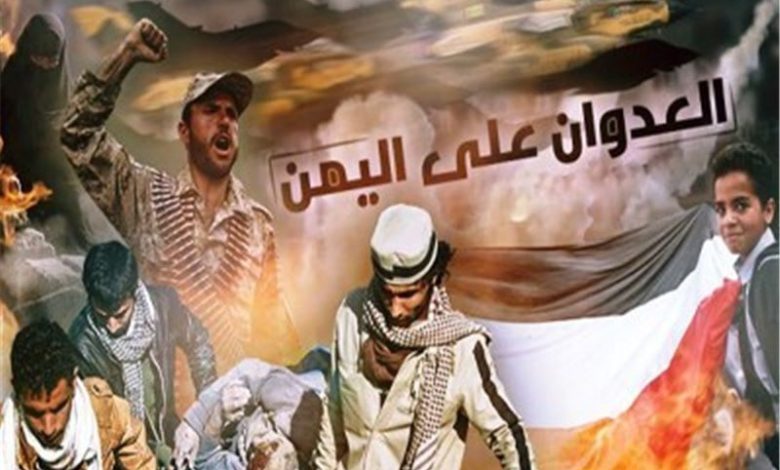
When Livelihoods Are Targeted: April 5th – A Documented Record of the Crimes of the US-Saudi-Emirati Aggression
On April 5th, one of the most dangerous forms of aggression was manifested, where the targeting was not limited to human beings, but extended to their basic necessities: food, water, and infrastructure.
From trucks carrying food supplies to fishing boats, and from airports to vital facilities, this day reveals a systematic policy aimed at suffocating Yemeni society and weakening its ability to withstand the attacks by striking at the very heart of its survival.
2015: Targeting Food Trucks and Residential Areas
On April 5, 2015, the aggression’s warplanes targeted trucks transporting food supplies in the Hays district of Hodeidah Governorate, resulting in the martyrdom of three citizens and the injury of nine others, as well as the destruction of approximately 160 tons of food supplies – a direct crime against food security.
In Sana’a, three children from the same family were injured in an airstrike that targeted the village of Bani Matar, a scene reflecting the targeting of residential areas.
2016: Targeting Airports and Civilian Areas
On April 5, 2016, the Saudi-led coalition launched airstrikes on the Nehm district of Sana’a, damaging civilian homes. They also targeted Taiz International Airport, causing significant damage to its facilities.
The airstrikes extended to the areas of Hayfan, Al-Jundiyah, and Jabal Habashi, damaging homes, farms, and other infrastructure in a widespread targeting of civilian areas.
2017: Crimes Against Fishermen and the Use of Cluster Bombs
On April 5, 2017, four fishermen were killed in Apache helicopter attacks targeting the coast of Hodeidah, a crime that directly impacted the livelihoods of thousands of families.
The salt factory in Bajil was also targeted, resulting in casualties. Multiple areas in Hodeidah were subjected to heavy shelling, including the use of cluster bombs, in a dangerous escalation.
The attacks extended to Taiz, Sana’a, Hajjah, and Sa’dah, targeting homes, farms, and infrastructure.
2018: Bombing of Airports and Government Facilities
On April 5, 2018, the Saudi-led coalition launched intensive airstrikes on Sana’a International Airport and the Al-Rayyan hills. Government facilities in Al-Bayda were also targeted, resulting in their complete destruction.
In Hodeidah, Hajjah, and Sa’dah, aerial and missile bombardments continued, targeting civilian property and livelihoods.
2019: Remnants of the Aggression and Crimes of Bombing and Abduction
On April 5, 2019, two children were injured by an explosion of unexploded ordnance in Hodeidah, highlighting the continued dangers of war even after the cessation of airstrikes.
The governorate also witnessed heavy artillery shelling of residential neighborhoods, along with crimes of abduction and home destruction perpetrated by mercenaries, in a multifaceted escalation.
2020: Targeting of Residential Areas and Health Facilities
On April 5, 2020, a civilian was killed and three children were injured by a shell that struck a residential neighborhood in Taiz.
In Hodeidah, artillery shelling targeted the Al-Hawbani clinic and civilian homes, while missile attacks continued on border areas in Saada, coinciding with airstrikes on several governorates.
2021: Continued Bombing of Residential Areas and Air Escalation
On April 5, 2021, a woman succumbed to her wounds in Taiz, and several civilians were injured by artillery shelling that targeted residential neighborhoods.
The Saudi-led coalition warplanes also launched airstrikes on Marib and Saada, and reconnaissance aircraft dropped bombs on areas in Hodeidah, causing damage to civilian property.
2022: Reconnaissance Raids and Continued Bombing
On April 5, 2022, reconnaissance aircraft launched raids on Hays district in Hodeidah, coinciding with missile and artillery shelling that targeted various areas, continuing the violations.
2023: Fortifications and Relentless Bombardment
On April 5, 2023, the aggression’s mercenaries continued their escalation in Hodeidah, establishing new fortifications and shelling various areas with artillery and other weapons.
A War Targeting the Foundations of Survival
April 5th reveals the true nature of the aggression as a war targeting the basic necessities of life, from food and employment to infrastructure and residential areas.
It is a documented record of systematic crimes aimed at breaking the will of the Yemeni people by starving and weakening them. However, it also reflects a steadfast resilience and growing awareness, making documentation a tool of resistance and memory a weapon against oblivion.