
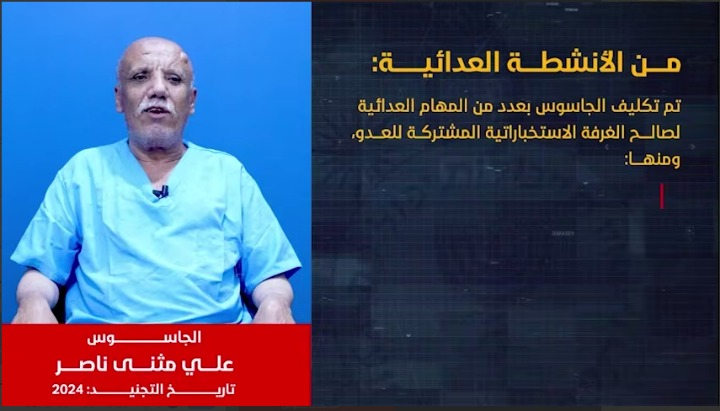
Spy Muthanna Confesses: Monitoring Army Leaders and Their Meetings, and Submitting Sensitive Intelligence and Military Mobilization Reports
New confessions by spy Ali Muthanna Nasser have revealed the nature of the dangerous intelligence missions he was tasked with carrying out for Saudi intelligence. These missions directly targeted the leadership of the Yemeni military establishment and its organizational structure, in an intensive attempt to infiltrate military decision-making circles and gather sensitive information to serve hostile agendas.
In his confessions, the spy explained that one of the most prominent tasks assigned to him was monitoring senior military leaders, including the Minister of Defense, the Chief of Staff, and the head of Military Intelligence. This indicates a precise intelligence focus on the military command structure and its sensitive key positions.
He also indicated that he was tasked with strengthening and gathering detailed information about military intelligence departments, including their headquarters and the nature of their work, in addition to monitoring the movements and meetings of military leaders. This reveals a systematic attempt to build a comprehensive database on the intelligence and military operations structure in the country.
In a related context, the spy confessed that he was tasked with monitoring the proceedings of military meetings, identifying their locations, chairpersons, and duration—a clear indication of an attempt to penetrate the most minute details of leadership and planning within the military establishment.
His duties also included submitting reports received from units and brigades to the Military Security Branch of the Military Intelligence Directorate, reflecting an advanced level of infiltration and an attempt to access internal information exchange channels.
The espionage activities were not limited to this. The spy confirmed that he was also tasked with monitoring troop movements, mobilization, and recruitment efforts, identifying mobilization sites and weapons depots, and following up on and confirming the results of strikes targeting military leaders. This reveals a direct role in supporting hostile targeting operations by providing his handlers with precise field intelligence.
These confessions reflect the extent of the focus that hostile intelligence agencies are giving to infiltrating the Yemeni military establishment and targeting its leaders and capabilities, within the framework of a parallel intelligence war aimed at weakening the home front, in contrast to escalating security vigilance working to uncover these networks and thwart their plans.