
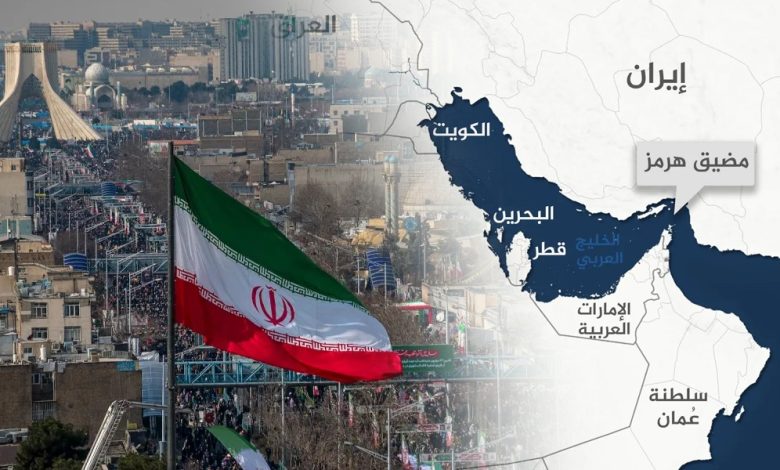
From Hormuz to oil: Iran reaps the rewards of resilience and imposes power dynamics.
In a regional landscape undergoing rapid transformations following the recent confrontation, the Islamic Republic of Iran stands out as an active player in shaping the features of the new phase, relying on field and political achievements that have strengthened its regional position.
Between its assertion of sovereignty over the Strait of Hormuz, the progress of the diplomatic track with the United States, and the return of its oil exports to the market after months of pressure and blockade, Tehran appears to be moving forward in establishing new equations that combine power and deterrence on the one hand, and political and economic presence on the other.
Hormuz: Affirming Sovereignty
In this context, Iranian First Vice President Mohammad Reza Aref affirmed that the management of the Strait of Hormuz will remain in Iran’s hands, one of the strategic achievements made possible by the sacrifices made by the Iranian people over decades.
Aref pointed out that Iran is moving towards fully utilizing its sovereign rights in the Strait, noting the importance of the Iranian role in securing maritime navigation and ensuring the safety of ships passing through one of the most important waterways in the world, which represents a vital artery for international trade and energy.
These statements reflect Tehran’s commitment to its geopolitical position in the region, and its keenness to consolidate its presence in strategic issues related to energy security and global navigation.
Resilience strengthens the political position
Meanwhile, Iranian Foreign Minister Abbas Araqchi, during his meeting with members of the National Security and Foreign Policy Committee of the Islamic Consultative Assembly, stressed that the resilience of the Iranian people and the performance of the armed forces during the recent “war” constituted a source of strength that enhanced the position of the Islamic Republic in any negotiation process.
Araghchi explained that Iranian diplomatic moves during the past period were based on what had been achieved on the ground, noting that the ongoing negotiations with the United States come within the framework of efforts to stabilize the situation and end the repercussions of the war, in a way that preserves Iranian national interests.
Understandings are an important step
For his part, Iranian President Masoud Pezeshkian stressed that the understandings reached so far represent an important step towards stopping the “war” and opening a new political path, noting that the final agreement has not yet been completed, but what has been achieved constitutes important progress on the path to a settlement.
Pezeshkian stressed that the unity of the Iranian people was the most prominent factor in facing the challenges, stressing that the bet on weakening the Iranian home front did not succeed, and that popular cohesion contributed to strengthening the country’s ability to overcome the difficult stage.
He also indicated that the government will continue to work to serve the Iranian people and protect their national interests, whether a final agreement is reached or negotiations continue for a longer period.
Oil overcomes the blockade
In a remarkable economic development, three Iranian oil tankers successfully crossed the US naval blockade imposed on Iranian ports in recent months, carrying approximately 4.8 million barrels of crude oil.
Iranian media described this move as a practical indication of a breakthrough in the oil export issue, especially with the imminent signing of the anticipated memorandum of understanding between Tehran and Washington.
The resumption of Iranian oil flow is of great importance to the Iranian economy, and reflects Tehran’s ability to translate the results of political and military resilience into direct economic gains, after a period of pressure and sanctions.
New phase
Recent developments combine the strategic dimension related to the Strait of Hormuz with the economic dimension related to the return of oil exports, in a scenario in which Tehran sees signs of its success in imposing new equations after the aggression.
Between asserting sovereignty over vital waterways, strengthening the negotiating position, and resuming oil traffic, Iran appears to be facing a phase in which it seeks to consolidate what it considers the results of steadfastness and confrontation, and transform them into political and economic gains that enhance its regional presence in the next phase.