
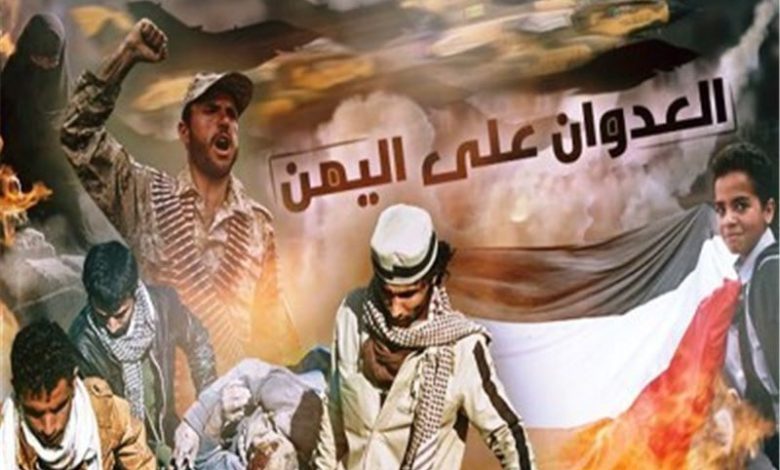
An unforgettable memory and crimes that cannot be erased… June 26th renews the testimony to the crimes of the American-Saudi-Emirati aggression against Yemen and the Yemeni people.
From the very first days of the US-Saudi-Emirati aggression against Yemen, military operations were not confined to the front lines, but extended to cities, villages, markets, homes, places of worship, archaeological sites, and service facilities. This pattern of targeting has resulted in thousands of victims and widespread destruction across various governorates. June 26th stands as a stark example of this trajectory, as years of aggression have witnessed a series of crimes directly targeting civilians and inflicting severe damage on infrastructure and public and private property. The humanitarian consequences of these attacks continue through landmines, remnants of war, and the relentless bombardment of residential areas.
The documented facts of this day reveal that the aggression did not distinguish between a historical site and a mosque, or between a house and a farm, or between a bus carrying displaced people and a market teeming with civilians, which made June 26th a new witness to one of the bloodiest chapters of the war in Yemen.
Targeting historical landmarks and places of worship: an attempt to erase Yemeni identity
On June 26, 2015, the aggression aircraft committed a crime that shook the Yemeni conscience by targeting the historic Al-Sharaf fortress and the mosque adjacent to it in the city of Al-Mahabisha in Hajjah Governorate while citizens were performing Friday prayers, which led to the martyrdom of citizens and the injury of ten others, in addition to destroying parts of the historic fortress and the mosque and causing extensive damage to the neighboring houses.
This targeting reflects the expansion of the circle of aggression to include cultural and religious landmarks, in a picture that confirms that the war did not only target the military infrastructure, but also extended to the historical and cultural heritage that represents a part of Yemen’s cultural identity that extends across the centuries.
In the same province, warplanes launched eight raids on the Al-Mujabir area in the Haradh district, causing damage to private property, burning a small camel, and damaging a tourist hotel, in a scene that reflects the extent of the damage inflicted on citizens’ livelihoods and the service sector.
Markets and government complexes are within range of the raids
In Al-Jawf Governorate, the raids extended to the central Al-Hazm market , where the aircraft targeted the Triangle area inside the market and a number of citizens’ homes. Six raids were also launched on the vicinity of the government complex and the Al-Shabika area, causing extensive material damage to government facilities and civilian property.
In Taiz Governorate, Al-Saqr Sports Club and the old airport were subjected to a series of raids that led to the destruction of large parts of their facilities and damage to surrounding homes, while in Marib Governorate the raids targeted the Al-Jadaan and Wadi Al-Jufaina areas, leaving destruction in citizens’ homes.
Repeated massacres against civilians
In 2016, five citizens were killed in two raids that targeted the Al-Qanzi intersection in the Al-Aroush area of Khawlan Al-Tayyal district in Sana’a Governorate, while raids continued on Marib, Taiz, Lahj and Nihm, coinciding with artillery and missile shelling that targeted residential neighborhoods in the city of Taiz, causing significant damage to homes and public and private facilities.
In 2017, three citizens, including a child, were killed and seven others were injured in an airstrike that targeted the Al-Shawariq area in the Razih district of Saada Governorate, while another citizen was injured as a result of Saudi artillery shelling on the Al-Dhaher district. Two children were also injured by the explosion of a bomb left over from the aggression in the Sahar district, in a continuation of the effects of prohibited weapons that continued to claim the lives of civilians.
The bus carrying displaced people: a crime that embodies the targeting of those fleeing war.
One of the most tragic crimes of this day was what happened in Al Hudaydah Governorate on June 26, 2018, when the aggression aircraft targeted a bus carrying displaced people on the road linking Al Jarahi and Zabid, which led to the martyrdom of nine citizens and the injury of eleven others.
This crime is one of the most prominent examples of targeting civilians fleeing areas of confrontation, in flagrant violation of the rules of international humanitarian law, as a means of transport carrying displaced people became a direct target of air raids.
On the s