
Gaza’s Children Endure Daily Hell Despite the Agreement
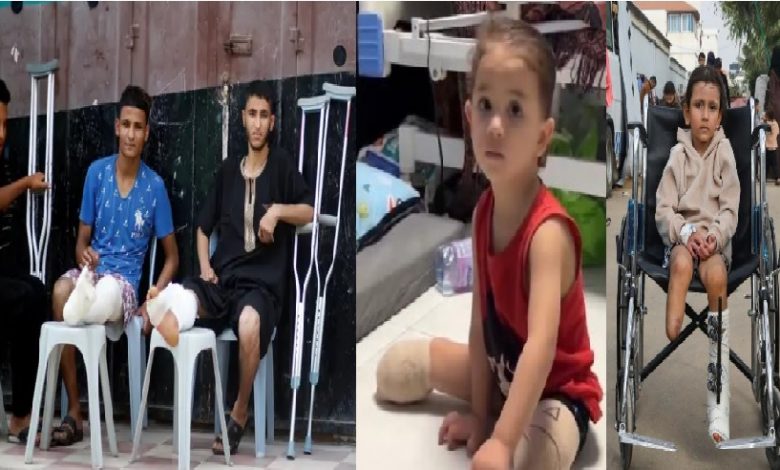
Despite the implementation of the ceasefire agreement on October 10, 2025, children in Gaza continue to face a tragic humanitarian reality. They live amid amputations, daily suffering, hunger, and cold, in the shadow of a collapsed healthcare system and the absence of the most basic essential services.
Amputated Children at the Heart of the Crisis
The Ministry of Health has confirmed 6,000 cases of limb amputation in Gaza, including around 1,500 children suffering permanent disabilities since the Zionist aggression. These injuries deprive them of a normal childhood and place their futures entirely in the hands of humanitarian support and long-term rehabilitation. The ministry also reports that thousands of wounded civilians and their families live in shocking conditions that require urgent medical, psychological, and social intervention.
Hospitals Are Incapacitated
Medical facilities in the Strip lack essential supplies such as wound disinfectants, IV solutions, and 40% of emergency medications, leaving emergency services nearly paralyzed. The occupation prevents the entry of vital medical and electrical equipment needed to run life-saving machinery, and continues to deny the opening of the border with Egypt for external treatment. This has led to the deaths of nearly 1,000 patients while awaiting travel approval.
Winter Deepens the Suffering
Thousands of displaced families are living in inadequately equipped tents in Gaza, facing a severe shortage of blankets, mattresses, and hygiene supplies, which makes them more vulnerable to disease and harsh cold. The International Organization for Migration has warned of the worsening humanitarian situation with the onset of the rainy season, while daily breaches by the occupation hinder the entry of most humanitarian aid.
Ongoing Suffering
A policy of starvation and medical neglect continues inside the occupation’s prisons, where detainees suffer widespread scabies infections, severe malnutrition, a lack of clothing and food, and reduced time outdoors—conditions that further intensify their physical and psychological suffering and threaten their lives.
Water and Basic Services
The UNRWA Commissioner-General confirmed that access to clean water has become a major challenge for Gaza’s residents. This is despite efforts to secure 90,000 cubic meters of water in November and to increase solid-waste management measures to limit disease spread—reflecting the fragility of daily life for children and the displaced.
Continued Aggressions
Settler incursions and attacks on Palestinians persist. Today, 375 settlers stormed Al-Aqsa Mosque’s courtyards—270 of them under the guise of tourism—in a clear attempt to Judaize the city and impose control over Islamic holy sites. Palestinian calls continue to intensify, urging stronger presence and protection of the mosque against daily violations.
The Daily Hell Is Not Over
Despite the ceasefire, children in Gaza and the West Bank are still living lives marked by amputations, suffering, cold, and hunger. Hospitals remain unable to provide even the most basic medical services. Thousands of displaced people are without safe shelter, and detainees endure deliberate medical neglect. The international community is called upon to act immediately to provide humanitarian support, rehabilitate hospitals, and ensure access to water, food, and aid for civilians—before this ongoing humanitarian disaster becomes an irreversible tragedy.