
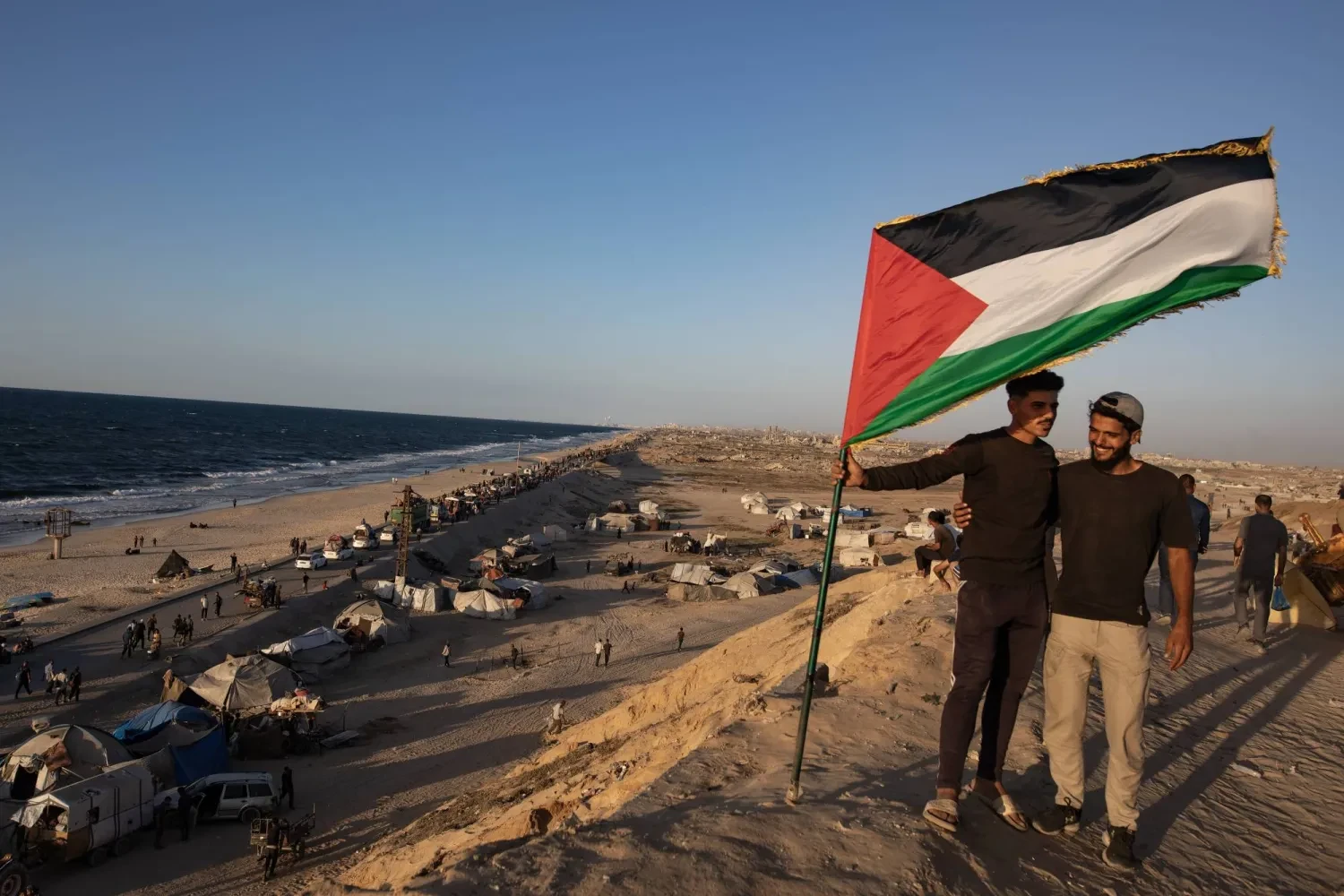
International role in Gaza after war has become one of most important determinants of next phase
The Palestinian Center for Political Studies, in a new analytical paper on the Gaza Strip post-war, affirmed that the international role in the Strip has become one of the most important determinants of the next phase on both political and humanitarian levels.
The Center explained in its analytical paper published on its website on Sunday that the intervention of international organizations today occurs in a complex environment, with the Israeli enemy attempting to exploit this reality to reshape the Gazan landscape to serve its security and political objectives.
The analytical paper indicated that the international system, consisting of UN institutions and non-governmental organizations, operates based on three main motives: preventing humanitarian collapse, managing the administrative vacuum, and restricting post-war scenarios to align with the interests of influential parties.
It mentioned that international organizations work within four classifications: the United Nations and its agencies, regional organizations, international non-governmental organizations, and international financial institutions, each with different intervention mechanisms and motives, ranging from direct humanitarian support and strategic reconstruction, to attempts to influence local governance.
It warned that the administrative vacuum and structural destruction in Gaza could turn international intervention into a tool for political hegemony, pointing out that the Israeli enemy imposes restrictions on the entry of construction materials and aid, and exploits reconstruction to impose security and political arrangements.
The analytical paper presented four future scenarios for the international role in Gaza: expanded UN administration, internationally-supported Palestinian administration, Israeli security hegemony, and Arab-UN partnership.
It affirmed that the most sustainable and legitimate scenario is a unified Palestinian administration with international support, followed by the Arab-UN partnership scenario, while Israeli security hegemony represents the most dangerous possibility because it turns Gaza into a permanent relief zone with no political horizon.
It also emphasized that the success of any international intervention is linked to three main factors: Palestinian unity, supportive Arab stance, and international pressure on the Israeli enemy to ensure the flow of aid and lifting restrictions on reconstruction.
The analytical paper recommended establishing a unified national body to manage the post-war phase, developing a Palestinian plan for reconstruction and stability, ensuring the sovereignty of Palestinian institutions over all relief and reconstruction projects, with the involvement of civil society in planning and implementation.
The Palestinian Center for Studies affirmed that the international role could be an opportunity to enhance Gaza’s resilience and build its institutions, or a tool to reshape it according to visions that do not serve the interests of its people, explaining that the key to the phase lies in the Palestinians’ ability to lead the recovery process and control the national decision.