
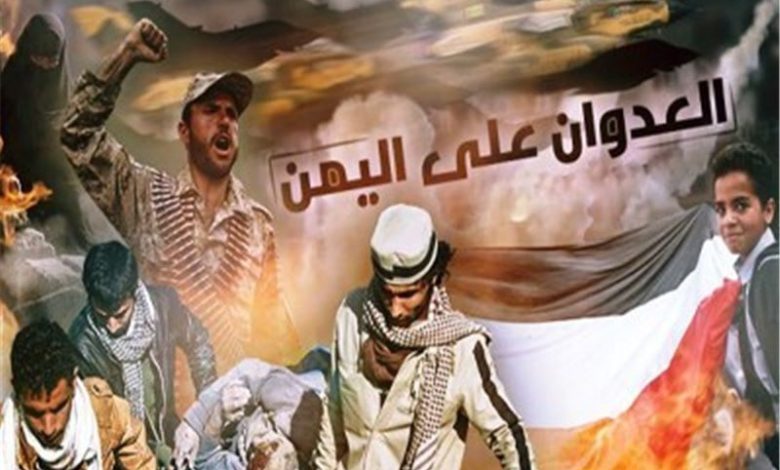
April 25th: A Documented Bloody Record of US-Saudi-Emirati Aggression Crimes Against Yemen
April 25th stands as a stark example of the integrated tools of US-Saudi-Emirati aggression targeting Yemen. Airstrikes, missile attacks, and artillery shelling are carried out simultaneously in a widespread and indiscriminate bombardment that affects farms, homes, and service facilities across various governorates. Throughout the years of aggression, this day reveals a systematic escalation targeting human beings and the foundations of their lives, leaving behind victims and widespread destruction that reflects the nature of the total war imposed on Yemen.
2015: Intense Missile Bombardment and Targeting of Civilian Facilities
On April 25, 2015, the government complex and civilian facilities in Haradh, Hajjah Governorate, were targeted by Saudi missile strikes, resulting in the deaths of two citizens and injuries to nine others. This attack targeted public service facilities and property.
In Ibb Governorate, the aggression’s warplanes completely destroyed the tax office in Al-Radhmah District, causing damage to neighboring homes.
In Saada, the Saudi enemy launched more than 45 missiles and mortar shells at the Al-Dhaher district, simultaneously shelling the areas of Munabbih and Baqim with various weapons, resulting in widespread destruction of civilian homes and farms.
2016: Targeting Civilians with Artillery Shelling and Ground Escalation
On April 25, 2016, a child was seriously injured by artillery shelling in Taiz, where mercenaries targeted several areas in Al-Wazi’iyah, Dhubab, and Khadir, using various types of weapons.
The shelling extended to Al-Jawf and Sana’a, targeting residential areas and civilian sites, continuing the expansion of ground attacks.
2017: Border Crimes and Targeting of Roads and Farms
On April 25, 2017, a civilian was killed by Saudi border guards, and another was wounded when his car was directly targeted by gunfire in Saada, in a crime that reflects the danger of the border areas.
The Saudi-led coalition launched airstrikes on public roads and farms in Saada, coinciding with 18 airstrikes on Hajjah and strikes on sites in Jizan, in a significant escalation.
2018: Intense Airstrikes on Several Governorates
On April 25, 2018, the coalition launched dozens of airstrikes on Sana’a, Hodeidah, Taiz, Hajjah, Al-Bayda, Amran, and Saada, targeting residential areas and civilian gatherings.
The airstrikes hit farms and livestock, while missile and artillery shelling continued on border areas in Saada, causing extensive damage to civilian property.
2019: Shelling of Residential Areas in Hodeidah and Taiz
On April 25, 2019, mercenaries targeted multiple areas in Hodeidah city with mortar shells and machine guns, including the vicinity of the airport and residential neighborhoods.
The shelling also struck residential areas in Taiz, resulting in property damage.
2020: Widespread Air Escalation and Ground Movements
On April 25, 2020, the Saudi-led coalition launched airstrikes on Al Dhale’a, Al Jawf, Ma’rib, Sa’dah, and Sana’a, targeting villages and populated areas.
In Hodeidah, mercenaries established new fortifications and shelled various areas with artillery, in a ground escalation coinciding with the airstrikes.
2021: Intense Airstrikes on Ma’rib and Continued Bombardment
On April 25, 2021, coalition aircraft launched 19 airstrikes on Sirwah and airstrikes on Madghal, coinciding with artillery shelling and mercenary movements in Hodeidah.
2022: Multi-Pronged Escalation and Widespread Targeting
On April 25, 2022, reconnaissance aircraft launched airstrikes on Hodeidah, while mercenaries established new fortifications in several areas.
They also targeted Marib with Katyusha rockets, shelled Saada, Hajjah, and other areas with artillery, and fired on civilian homes in several governorates.
A multi-pronged war against the Yemeni people
The crimes of April 25th reveal the aggression’s use of a comprehensive mix of weapons of killing and destruction, from airstrikes to missiles and artillery, in a systematic targeting of civilians, their livelihoods, and infrastructure. Despite this ongoing escalation, the Yemeni people continue their steadfastness, affirming that these crimes will not break their will, but will instead stand as a testament to a period of defiance and resilience in the face of aggression.