
From Cotton to Sovereignty: The Cotton Industries Enhancement Program Opens the Production Front and Rebuilds Yemen
At a pivotal moment in Yemen’s economic struggle—where a suffocating blockade intersects with the urgent need to build an independent economy—the launch of the Cotton Industries Enhancement Program came to affirm that the battle for production is no longer merely a development option, but a matter of sovereignty and survival.
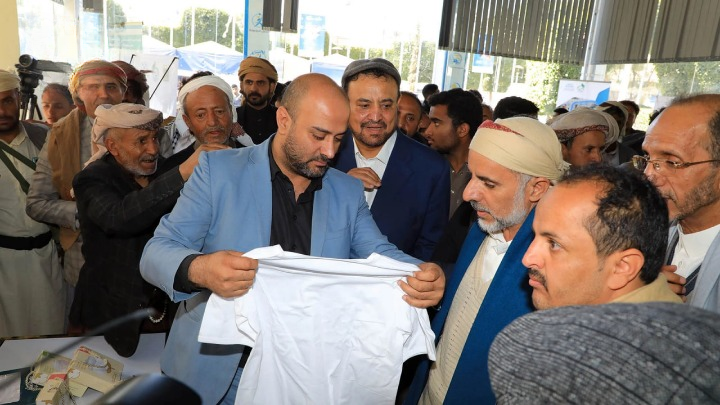
The event, attended by the Acting Prime Minister, Allama Mohammed Muftah, was not simply the inauguration of a program; it was a clear declaration that the state and society are entering a new phase—rebuilding the system of productive values and reclaiming Yemen’s economic identity after decades of systematic destruction in favor of a culture of consumption.
Revisiting the Yemeni Productive Self: Restoring What Was Dismantled
The Acting Prime Minister described the program’s launch as a courageous step toward reassessing the “Yemeni productive self”—a society that historically knew no unemployment, particularly in rural areas where every individual played a role in the production cycle.
He explained that what this system endured over past decades was not natural development, but a deliberate dismantling of the values of work and production, replaced by a destructive consumer culture that stripped society of its ability to rely on itself.
This diagnosis returns the issue to its roots: the problem is not a lack of resources or capabilities, but the erosion of the productive value system that historically formed the backbone of Yemen’s strength.
Yemen: A History of Cotton and Garment Production
Allama Muftah evoked the historical and civilizational dimension of cotton industries, recalling that Yemen was renowned throughout history for producing and exporting some of the finest garments—so much so that the Prophet Muhammad, peace and blessings be upon him and his family, recommended that he be shrouded in two Yemeni Sahouli garments, honoring both the craft and the people who mastered it.
This reference was not merely symbolic; it affirmed that cotton manufacturing is an integral part of Yemen’s economic and cultural identity, and that reviving it represents a return to origins—not a leap into the unknown.
From Consumption to Production: The Battle to Rebuild Values
The Acting Prime Minister stressed that one of the gravest challenges Yemen has faced is its transformation from a producing society into a consumer of everything. Overcoming this reality, he said, requires a comprehensive rebuilding of the value system—beginning with the family and extending to society and the state.
He noted that the government is currently reviewing, evaluating, and reforming legislative and institutional frameworks, while creating an enabling environment for production across all sectors. There can be no stable economic future for Yemen, he emphasized, unless the economies of the individual, the family, and society are revitalized.
Localizing Industry: From Small Workshops to Export
Outlining a clear future pathway, Allama Muftah called for focusing on the establishment of small workshops as the solid foundation for localizing industries and ensuring their growth and prosperity—alongside restoring respect for a culture of production, ultimately reaching the stage of export.
He delivered a direct message to capital owners, warning against dependence on easy profits through imports, and urging investment in national manufacturing in line with the objectives of the September 21 Revolution, which seeks to transform Yemen into an industrial base for self-sufficiency and export. Achieving this, he stressed, requires collective resolve and serious, coordinated action.
Comprehensive Government and Media Support for National Products
The Acting Prime Minister affirmed that the government will facilitate and develop this sector through support, assistance, and promotion. He directed official media outlets to provide free advertising for national products and to allocate dedicated segments highlighting the value of local goods.
He also emphasized the role of the Ministry of Economy, Industry, and Investment in helping producers improve product quality, and in prioritizing training and capacity-building as two essential pillars of any successful industrial renaissance.
The Capital Secretariat: Financing and Marketing at the Heart of the Battle
For his part, the Mayor of the Capital, Dr. Hamoud Abbad, announced support from the Small and Micro Enterprises Development Authority amounting to 600 million riyals in concessional loans for families engaged in small projects. He also outlined plans to establish marketing centers for productive families’ goods and to require the allocation of dedicated spaces within shopping malls to sell these products.
He emphasized that the Capital Secretariat—being the largest population center—must serve