
Accelerating Saudi-Emirati Moves in Hadramout: A Race for Influence Threatens Stability in the Eastern Governorates
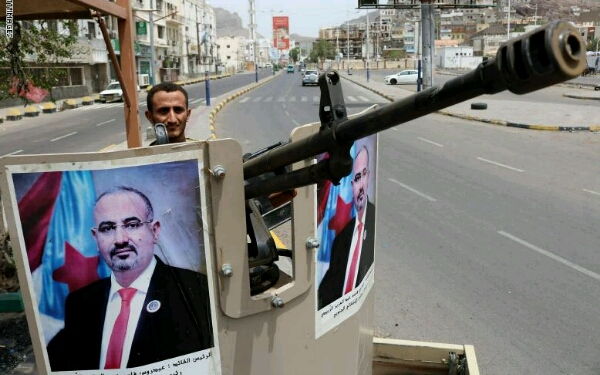
The Saudi-Emirati aggression coalition continues to bolster its military presence in the occupied governorate of Hadramout, through intensified movements in Al-Abr District, reflecting a frenzied race to dominate the oil- and gas-rich areas of Wadi Hadramout, amid a clear escalation of tensions between the occupation’s proxies.
Field sources confirmed that Riyadh has deployed nearly 20,000 fighters to Al-Ruwaik Camp, as part of a plan to reposition forces and build new Saudi-aligned military formations. These include Salafi elements formed in early 2023, which have been directed toward positions of the 37th Armored Brigade in Al-Khash‘ah, currently controlled by the Emirati-backed Southern Transitional Council (STC) militia. The moves were accompanied by the recall of Saudi officers from the Najran front to assume new leadership roles within the mobilization and reinforcement operations—an attempt to reclaim influence Riyadh has recently lost to Abu Dhabi’s proxies.
The escalation has not been limited to Saudi-aligned movements. The area recently witnessed the targeting of a Giants Brigades militia vehicle by a Saudi drone in Khashm Al-Ayn, amid heavy warplane overflights—an unmistakable message that Saudi Arabia is exerting pressure on the UAE to preserve its foothold in Wadi Hadramout’s oil basin.
The backdrop to this escalation lies in Riyadh’s long-standing ambitions in the eastern governorates, particularly Al-Mahrah and Hadramout, which were within its regional sphere of influence since the kingdom’s founding. According to a report by The Guardian, Saudi Arabia threatened to bomb STC forces unless they withdrew from certain areas—an indication that the conflict between Saudi and Emirati occupation proxies has moved beyond tactical disagreements to an open struggle over influence and control of resources.
In an analytical comment, Dr. Abdulaziz bin Habtoor, a member of the Supreme Political Council, stated during the program “An Hour for History” on Al-Masirah TV that these maneuvers serve as a cover for the aggression’s failure in Yemen after more than a decade. He noted that Saudi control over specific areas opens the door to American and British influence, while the UAE’s grip on Aden and Yemeni islands paves the way for Zionist expansion—rendering the south and east vulnerable to dual occupation and sustained depletion of resources and civil society.
It is worth noting that Hadramout, Yemen’s largest governorate by area and richest in resources, has since the start of the aggression in March 2015 become an open arena for conflicts among occupation proxies. Each force advances its regional agenda at the expense of local security and stability, while civilians continue to bear the heavy cost amid fragile state institutions and the absence of any local authority capable of imposing security.
The recent movements in Al-Abr are not a fleeting military maneuver, but rather a sign of accelerating efforts to impose a new reality by force in the eastern governorates. They reflect the intensifying Saudi-Emirati struggle over influence and control of wealth, placing Hadramout on the brink of a security explosion that could spill over into neighboring governorates—making close monitoring of developments there essential to understanding the future of eastern Yemen in the years ahead.