
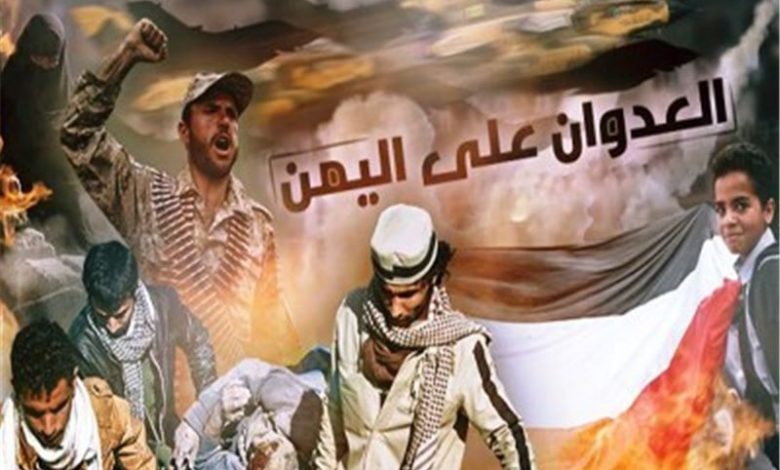
December 31: Wounds That Do Not Heal and a Memory the Years Cannot Erase from the Record of Aggression
December 31 is not merely a day that bids farewell to a passing year and welcomes another; it is a day on which wounds are reopened and a long history of crimes committed by the forces of aggression against a people who have never known submission or defeat is recalled. On this day, new pages are revealed from the black record of crimes perpetrated by the U.S.–Saudi–Emirati coalition against innocent civilians.
Between a sky filled with shrapnel and aircraft of death, and a land soaked with the blood of martyrs, scenes of massacres are etched into the collective memory—cities and villages stained by atrocities, entire families erased from civil registries. Despite everything, the aggression persists in pressing forward, embodying scenes of killing and destruction until the final moments of every year.
2015: A Year Ending in Massacres
On December 31, 2015, the aggression concluded its first year with a horrific massacre in the Khayran al-Muharraq district of Hajjah governorate, where 15 civilians—among them women and children—were martyred when two airstrikes hit a citizen’s home and neighboring houses. Airstrikes continued on Dhamar, Al-Jawf, Marib, and Taiz, targeting Al-Mokha port and civilian facilities. Saudi shelling also extended to the districts of Razih, Al-Zahir, and Kataf in Sa’ada, striking villages, farms, and roads.
2016: Displacement Does Not Protect from Death
Airstrikes targeted a residential area sheltering displaced people in Dhubab, Taiz governorate, killing one civilian and wounding three others. Strikes also hit Nihm, Sirwah, and Safan in and around Sana’a, causing extensive damage. Sa’ada featured prominently on the list of crimes, as areas in Kataf, Baqim, and Al-Malahiz were subjected to repeated bombardment and air raids that devastated homes and property.
2017: Public Roads Turn into Graves
Four civilians were martyred in an airstrike that hit a public road in Gholat Ajib, Amran governorate. Bombardment continued in Marib, Hajjah, and Al-Hodeidah, where two civilians were wounded after a strike on a farm in Al-Tuhayta district. In Sana’a, two airstrikes targeted the Al-Nahdain area in Al-Sabeen district, while Nihm witnessed shelling and the dropping of illumination bombs in a scene of systematic terror.
2018: Continued Border Targeting
Aggression aircraft continued their strikes on Sa’ada, launching raids on Al Ali and Sha’ban in Razih and various areas in Baqim, targeting homes and farms. This year also saw an increase in drone operations as a complementary tool in the course of the war.
2019: Shelling Pursues Residential Neighborhoods
Coalition mercenaries shelled Al-Shuhada neighborhood in Al-Hali district with four Katyusha rockets, while shelling continued on Hays and Al-Durayhimi. New military fortifications were also established in Al-Jah area of Bayt Al-Faqih in preparation for ongoing attacks.
2020: Direct Targeting of Sana’a
At the end of the year, the aggression openly announced the targeting of the capital, Sana’a, with an airstrike on Sana’a International Airport and another on Al-Dailami Air Base, in addition to seven strikes on Rimat Hamid in Sanhan and raids on Bani Hashish. Meanwhile, shelling and sweeping operations continued in Al-Hodeidah, alongside the construction of military fortifications in citizens’ farmlands.
2021: Pain Extends to the Last Day of the Year
The aggression targeted Usaylan district with four airstrikes and Al-Sawadiyah with another, launching 17 raids on the Al-Balaq area in Wadi Marib. All this occurred amid continued shelling and fortifications in Al-Hodeidah, making the final days of the year a mirror image of previous years of fire.
2022–2024: Remnants of Death Continue to Kill
The ends of subsequent years were no less severe. In 2022, three civilians and an African migrant were injured by Saudi shelling in Al-Raqou, Sa’ada. In 2024, three civilians were martyred when unexploded remnants of aggression detonated in Al-Durayhimi district—confirming that the lethal impact of the aggression persists even after aircraft fall silent.
An Annual Witness to a Renewed Crime
Nothing turns the page on December 31. It stands as an annual witness to a renewed crime and a single truth: Yemenis end every year with blood, yet enter the next with faith and steadfastness. Between pain and resilience, an equation is forged—one that transforms blood into the capacity for victory.