
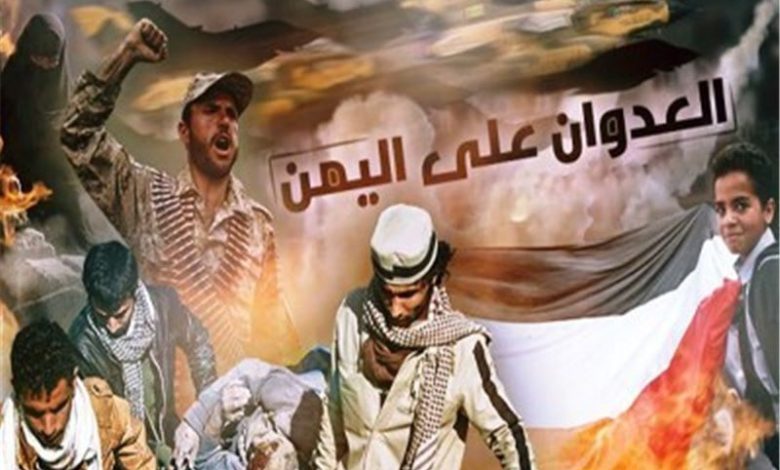
January 13: A Day That Exposes the Systematic Nature of the Aggression Against Yemen
January 13 does not pass as an ordinary date in Yemen’s collective memory. It is a day on which evidence accumulates of an aggression that turned civilian infrastructure—homes, hospitals, factories, telecommunications networks, and markets—into open targets, in a scene that proves what occurred was not a series of incidental mistakes, but a deliberate policy that targeted people before places.
2016: Targeting Daily Life and Service Infrastructure
On January 13, 2016, aircraft of the US–Saudi–Emirati-led aggression launched a wave of extensive airstrikes across several governorates, focusing on homes, markets, and telecommunications networks.
In Sa’ada, a woman was martyred after succumbing to her wounds from airstrikes on the Al-Shawariq area in Razih District, while areas of Munabbih and Razih were subjected to missile and artillery shelling that caused extensive damage to citizens’ property.
In the Capital Secretariat (Sana’a), a child was injured and homes were damaged following an airstrike on the Al-Karama residential neighborhood, while warehouses belonging to Kamaran Company in Hadda were targeted, leading to their destruction and damage to nearby homes.
The targeting extended to Taiz, where airstrikes hit hotels, hospitals, residential neighborhoods, and public facilities. The Republican Palace and its surroundings were also struck, and dozens of homes were damaged.
In Al-Jawf, Marib, Sana’a, and Dhamar, airstrikes targeted telecommunications towers, popular markets, public roads, and farms—clear indicators of a deliberate effort to cripple the foundations of daily life.
2017: Factory Massacre and the Expansion of Targeting
January 13, 2017 witnessed one of the most horrific industrial crimes, when 17 workers were killed and 13 others injured in four airstrikes targeting the “Chemico” paint factory in Taiz.
This crime coincided with shelling that struck police training centers, schools, and residential areas in Dhamar, Sa’ada, Sana’a, Marib, and Al-Hodeidah, in addition to the use of cluster munitions in Razih—an escalation that underscored the systematic nature of the attacks.
2018: Expanding the Scope of Symbolism—Even Cemeteries
On January 13, 2018, airstrikes did not stop at homes and facilities but reached the Martyrs’ Cemetery (Rawdat Al-Shuhada) in Sa’ada, where dozens of graves were damaged. A warehouse storing school textbooks was also targeted, a scene laden with symbolism reflecting an assault on memory, identity, and knowledge.
In Al-Hodeidah, Al-Bayda, and Marib, airstrikes continued to hit public roads, security administrations, and homes, while missile and artillery shelling persisted against border districts.
2019: Communications Under Fire and Universities Targeted
On January 13, 2019, a child was injured by Saudi shelling on Munabbih in Sa’ada, while telecommunications networks in Raymah were targeted by three airstrikes. Air raids also extended to Haradh in Hajjah.
In Al-Hodeidah, shells struck the University of Al-Hodeidah, its surroundings, and residential neighborhoods—an escalation that placed educational institutions in the crosshairs and multiplied the social cost of the war.
2020–2021: Continued Bombardment and the Entrenchment of a Targeting Pattern
These years saw the continuation of artillery and missile shelling on residential neighborhoods in Al-Hodeidah, Saudi shelling on border areas in Sa’ada, and airstrikes on Marib. Meanwhile, mercenary forces established military fortifications within civilian areas, further deepening the threat to civilians.
2022: Hospitals and Farms in the Line of Fire
On January 13, 2022, the aggression targeted a poultry farm hangar in Al-Jarrahi District, Al-Hodeidah, resulting in the martyrdom of two civilians. Four staff members of the Model 48 Hospital in Sanhan were also injured by airstrikes nearby.
The shelling extended to Al-Bayda and Marib, targeting homes and farms, once again repeating the pattern of striking both food security and health services.
2023: Renewed Wounds
On January 13, 2023, four civilians were injured by Saudi army fire in the border district of Munabbih, while artillery shelling continued on areas in Al-Hodeidah—leaving the date as a recurring witness to wounds that reopen despite the passage of years.
A Documented Chain of Crimes
The events of January 13 throughout the years of aggression reveal that the targeting was neither incidental nor limited, but followed a consistent methodology: striking infrastructure, exhausting services, and inflicting the greatest possible losses on civilians in an attempt to break society before the battlefield. It is a documented chain of crimes that condemns the aggression and places the international community before a responsibility that does not expire with time.