
Gaza Between Rubble and Disease: A Worsening Humanitarian Catastrophe
The Gaza Strip continues to endure a complex humanitarian crisis that is escalating daily, fueled by the ongoing Israeli aggression since October 2023 and the widespread destruction of vital infrastructure.
In a scene reflecting the depth of the disaster, garbage, rubble, and sewage are piling up in the streets and camps, creating a polluted environment that threatens the lives of residents, especially children, the elderly, the wounded, and the displaced. With shortages of basic services and sanitizing materials, and rising temperatures, health and environmental risks are increasing, pushing the Strip toward a deepening catastrophe that is proving difficult to contain.
An Escalating Crisis
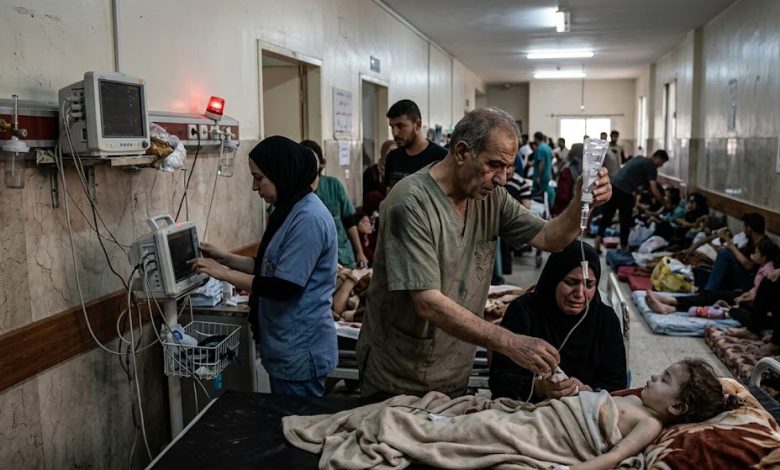
Amjad al-Shawa, head of the Palestinian NGO Network, warned that the Gaza Strip is facing an unprecedented health and environmental crisis that is worsening daily as a result of the aggression and the destruction of infrastructure. He explained that hospitals are operating at limited capacity, while more than 20,000 wounded individuals require treatment outside the Strip, including critical cases requiring advanced surgeries and rehabilitation services that are currently unavailable.
Meanwhile, Al-Shawa pointed out that the accumulation of waste, rubble, and sewage, coupled with water scarcity and the lack of sterilization equipment, has created a breeding ground for insects and the spread of diseases. He added that the continued closure of humanitarian crossings prevents the entry of medicines, medical supplies, and fuel necessary for operating hospitals and water and sanitation services. He stressed the urgent need for international intervention to facilitate the entry of essential supplies and enable municipalities and humanitarian organizations to remove rubble and waste and reduce the daily risks to civilians.
Catastrophic Toll
In the same context, the Ministry of Health in Gaza announced that the number of martyrs has risen to 72,302, while the number of injuries has reached 172,090 since the start of the Israeli aggression on October 7, 2023. The Ministry explained that many victims remain under the rubble or in the streets, as medical and civil defense teams are unable to reach them. It also confirmed that the continued closure of humanitarian crossings prevents the entry of essential medical supplies and fuel to operate hospitals, exacerbating the suffering of the wounded and sick and posing a direct threat to the lives of thousands of civilians.
Endless Suffering
Meanwhile, the Palestinian Center for Prisoner Studies confirmed that approximately 350 Palestinian children are imprisoned in Israeli jails, subjected to torture, medical and psychological neglect, administrative detention, and unfair trials. The center explained that the detained children face harsh conditions, including overcrowding in cells, denial of family visits, and inadequate healthcare, exacerbating the psychological and social repercussions of these violations on them and their families. The center noted that violations against children have escalated since October 2023, with policies of starvation and physical and psychological abuse, leading to the deaths of some children in prison.
Violation of Freedom of Worship
In the same context, the occupying forces continue to close the courtyards of Al-Aqsa Mosque for the 38th consecutive day, exploiting the closure to consolidate their control and impose colonial religious rituals by Zionist groups with the aim of Judaizing the mosque and imposing Passover sacrifice rituals. Jerusalemite authorities affirmed that these measures constitute a blatant violation of international law and threaten stability in Jerusalem, calling on the international community to take immediate action to protect holy sites and guarantee freedom of worship.
Urgent Appeal
Accordingly, experts and observers stressed the urgent need for international intervention, including opening humanitarian crossings to allow the entry of medicines, medical supplies, and fuel; enabling municipalities and humanitarian organizations to remove rubble and waste; protecting Palestinian children and prisoners; and guaranteeing freedom of worship at Al-Aqsa Mosque. They emphasized that the continuation of the current situation without effective intervention could lead to an uncontrollable health, environmental, and humanitarian catastrophe, directly threatening the resilience of civilians and exacerbating the daily tragedy endured by the Gaza Strip.
A worsening catastrophe
Gaza today is no longer just a besieged sector, but is experiencing an escalating humanitarian catastrophe that threatens the lives of millions daily, in light of the continued aggression, the collapse of basic services, the accumulation of rubble, waste and sewage, in addition to the ongoing violations against children and prisoners, which requires the international community to take urgent action before the situation worsens to more dangerous levels.