
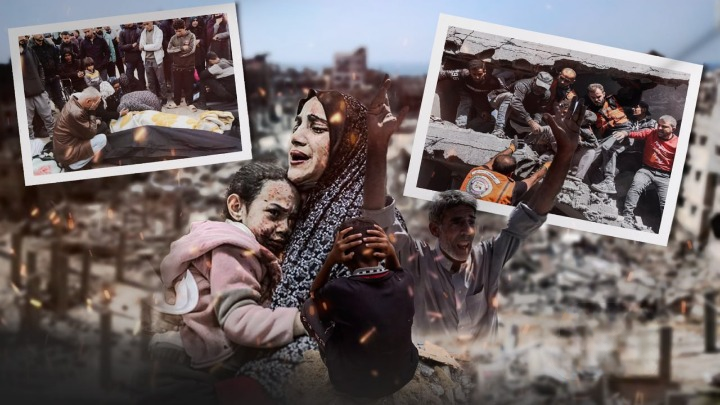
Gaza Under a Bread Siege: “Starvation Engineering” Escalates
Despite the ceasefire announcement, the humanitarian tragedy in the Gaza Strip is deepening at an accelerating pace, with bread once again at the forefront of the crisis. This situation clearly reveals the features of a systematic policy pursued by the Zionist enemy to subjugate more than two million people through the weapon of starvation and siege.
A Daily Scene of the Crisis
With the first light of dawn, long lines of citizens form in front of bakeries across the Strip, attempting to obtain the bare minimum of bread, which has become the primary lifeline for the population. This daily scene does not reflect a mere temporary crisis, but rather reveals the profound disruption in the food supply system, resulting from the severe restrictions on flour imports and the decline in bakery production to levels insufficient to meet the growing needs.
A Systematic Policy
In this context, Hamas asserts that what is happening in Gaza is a deliberate “starvation engineering” operation aimed at reshaping the living conditions of the population by controlling the basic necessities of life. Data indicates that the amount of aid allowed in does not exceed 38% of what entered before the aggression, despite the agreement to allow approximately 600 trucks to enter daily. This reveals the extent of Israel’s ongoing violations of the ceasefire agreement.
This policy has been accompanied by a significant increase in bread prices, amidst declining purchasing power and widespread poverty, exacerbating the suffering of Palestinian families.
A Widening Food Gap
Data reveals that the daily need for flour in the Gaza Strip reaches approximately 450 tons, while only about 200 tons are available, creating a severe gap that threatens food security. Currently, only about 30 bakeries are operating, producing only a fraction of the demand, despite the distribution of limited quantities free of charge or at subsidized prices. This situation perpetuates the crisis and even exacerbates it.
Destruction of Agriculture and Market Strangulation
The crisis was not limited to supply shortages; it extended to the near-total destruction of the agricultural infrastructure. Tens of thousands of dunams of farmland were destroyed, leading to the collapse of local production. The enemy also imposed severe restrictions on the entry of seeds and fertilizers, along with exorbitant fees on trucks, causing a sharp market imbalance and an unprecedented rise in the cost of basic commodities.
From Exhaustion to Danger
In parallel with the food crisis, the health sector in Gaza is facing a critical situation. Nasser Medical Complex warned of serious repercussions due to the shortage of fuel and spare parts needed to operate generators. The shutdown of the generators threatens to paralyze vital departments, given the continued restrictions on the entry of medical supplies, foreshadowing a double humanitarian catastrophe, especially with the increasing number of wounded and sick.
Ongoing Violations
Under these circumstances, the Zionist enemy continues its violations of the ceasefire agreement by targeting civilians and preventing the flow of aid, in addition to ongoing attacks on holy sites, most notably Al-Aqsa Mosque. Direct and indirect killings also continue, while warnings escalate that what is happening transcends the traditional siege and constitutes a complex policy of extermination targeting the Palestinian people in every aspect of their lives.
Gaza: Between Hunger and Resilience
All of these facts reveal that what the Gaza Strip is experiencing is not a passing crisis, but a systematic war waged with multiple tools, foremost among them the weapon of starvation and economic blockade. With the continuation of these policies, more than two million people remain in a daily struggle against hunger and deprivation, amidst a suspicious international silence and a clear inability to stop the violations. Despite this, the Palestinian people continue their steadfastness, affirming that the will to live is stronger than all attempts at subjugation, and that Gaza, despite its wounds, will remain unbreakable.